✔ Competitive Pricing ✔ Quality Service ✔ Extensive Stock ✔ Experienced Staff





 01726 828 388


Reset Filter
 Price
PriceDust Masks and Visors Guide
A Guide to Dust Masks and Visors for Woodworking
Woodworking generates far more than just visible sawdust. Fine airborne dust from sanding, routing, sawing and machining can remain suspended in the air for hours and may pose significant health risks. UK Health and Safety Executive (HSE) guidance highlights the importance of controlling wood dust exposure through extraction, ventilation and suitable respiratory protection.
Remember, a dust mask is the last line of defence, not the first.
Always prioritise:
* Dust extraction at the machine.
* Good workshop ventilation.
* Housekeeping (vacuum rather than sweep).
* Appropriate respiratory protection.
Understanding Mask Ratings
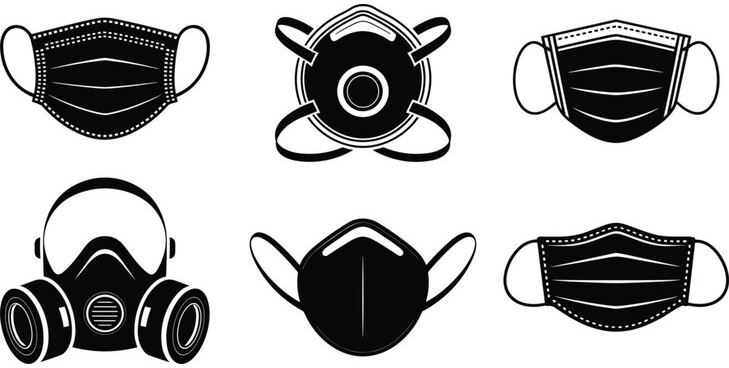
In the UK, disposable dust masks are commonly rated as FFP1, FFP2 or FFP3 under EN 149 standards. The higher the rating, the greater the filtration performance.
Rating FFP1: Basic protection
Suitable for light DIY tasks with minimal dust.
Rating FFP2: Good protection
Suitable for general woodworking and occasional sanding.
Rating FFP3: Highest filtration of the three classes
Suitable for heavy sanding, MDF, hardwoods and professional workshops.
HSE notes that FFP1, FFP2 and FFP3 respirators can reduce inhaled dust by factors of approximately 4, 10 and 20 respectively when correctly fitted.
Which Mask for Which Woodworking Task?
***
Hand Sawing Outdoors
Recommended: FFP1 or FFP2
Suitable for:
* Cutting timber outside
* Occasional DIY projects
* Short-duration jobs
Because outdoor work disperses dust quickly, a basic mask may often be sufficient for non-intensive tasks.
***
Circular Saw, Mitre Saw and Table Saw Work
Recommended: FFP2 minimum
Suitable for:
* Regular cutting of softwoods
* Indoor workshops with extraction
* Medium levels of airborne dust
Upgrade to FFP3 if:
* Dust extraction is poor.
* You spend long periods cutting.
* You are cutting hardwoods regularly.
***
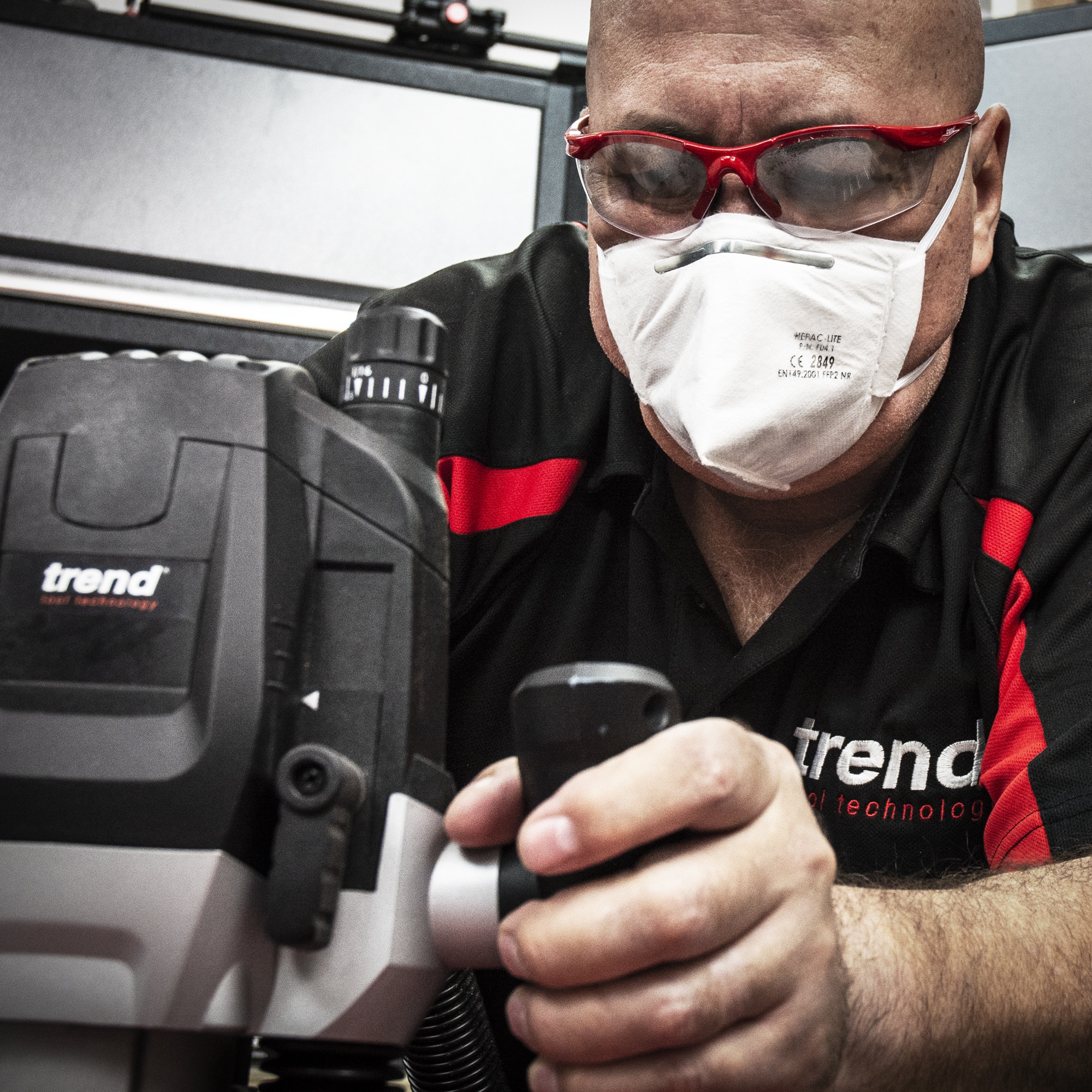
Routing and Planing
Recommended: FFP3
Suitable for:
* Router tables
* Hand routers
* Thicknessers and planers
These machines create large quantities of fine airborne particles that can easily bypass lower-grade protection.
***
Sanding (Hand or Machine)
Recommended: FFP3
Especially important for:
* Random orbital sanding
* Belt sanding
* Fine finishing work
Sanding produces some of the finest and most hazardous wood dust in a workshop. Many woodworking specialists consider FFP3 the default choice for sanding operations.
***
Working with MDF
Recommended: FFP3
MDF produces extremely fine dust that spreads easily throughout a workshop.
For frequent MDF use, many woodworkers prefer:
* Reusable half-mask respirators with P3 filters.
* Powered respirators for comfort during long sessions.
***
Exotic Hardwoods
Recommended: FFP3
Many hardwood species can cause:
* Allergic reactions
* Asthma symptoms
* Respiratory irritation
Extra caution is advised when machining unfamiliar or exotic species.
Choosing Between Disposable and Reusable Masks
***
Disposable Masks (FFP2/FFP3)
Advantages
* Low cost
* Convenient
* No maintenance
Best For
* Occasional DIY users
* Site work
* Visitors to the workshop
Drawbacks
* Less economical for regular use
* Can become uncomfortable over long periods
***
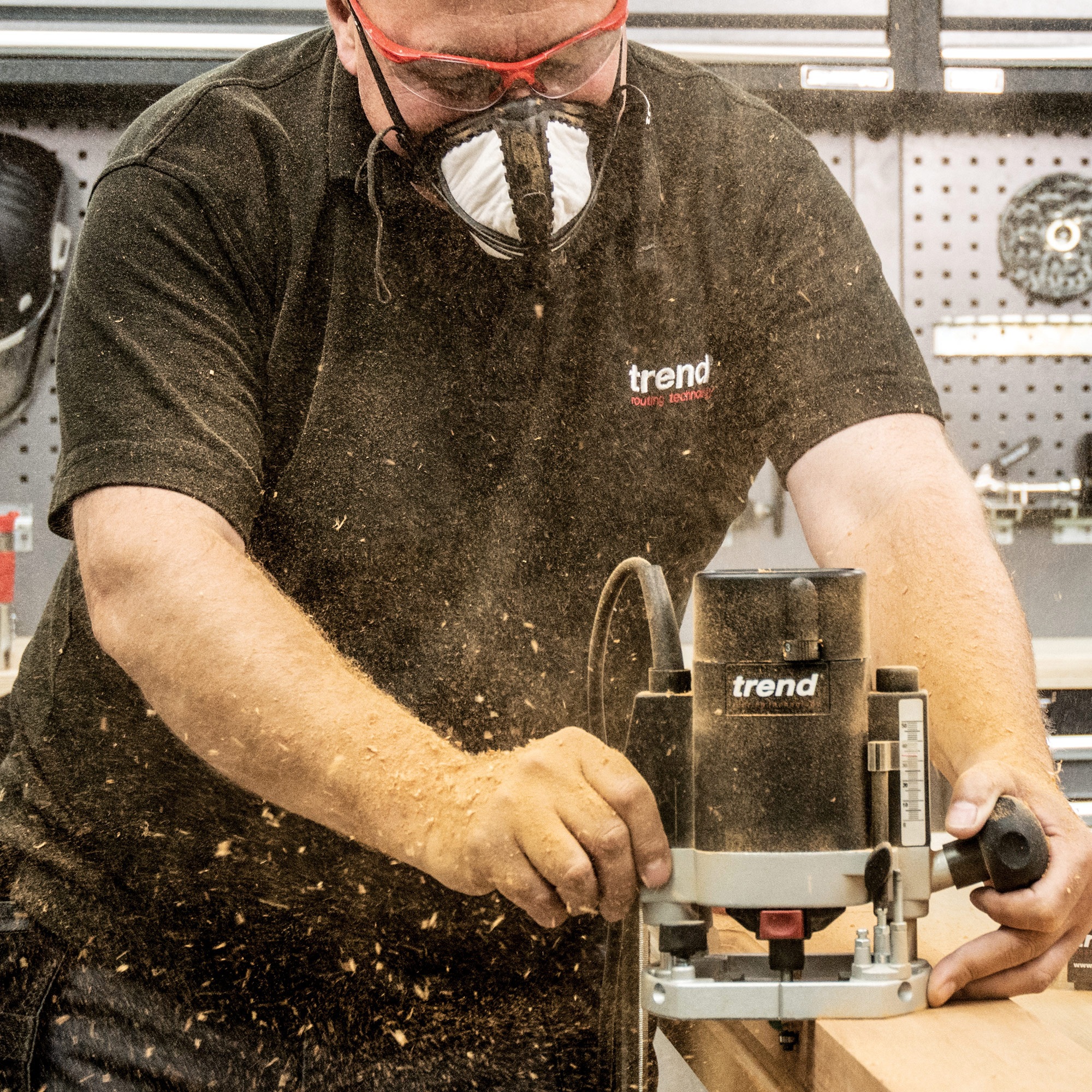
Reusable Half-Mask Respirators
Usually fitted with P3 particulate filters.
Advantages
* Better fit and seal
* More comfortable
* Lower long-term cost
* Better protection for regular users
Best For
* Hobbyists who work weekly
* Serious amateurs
* Small professional workshops
***
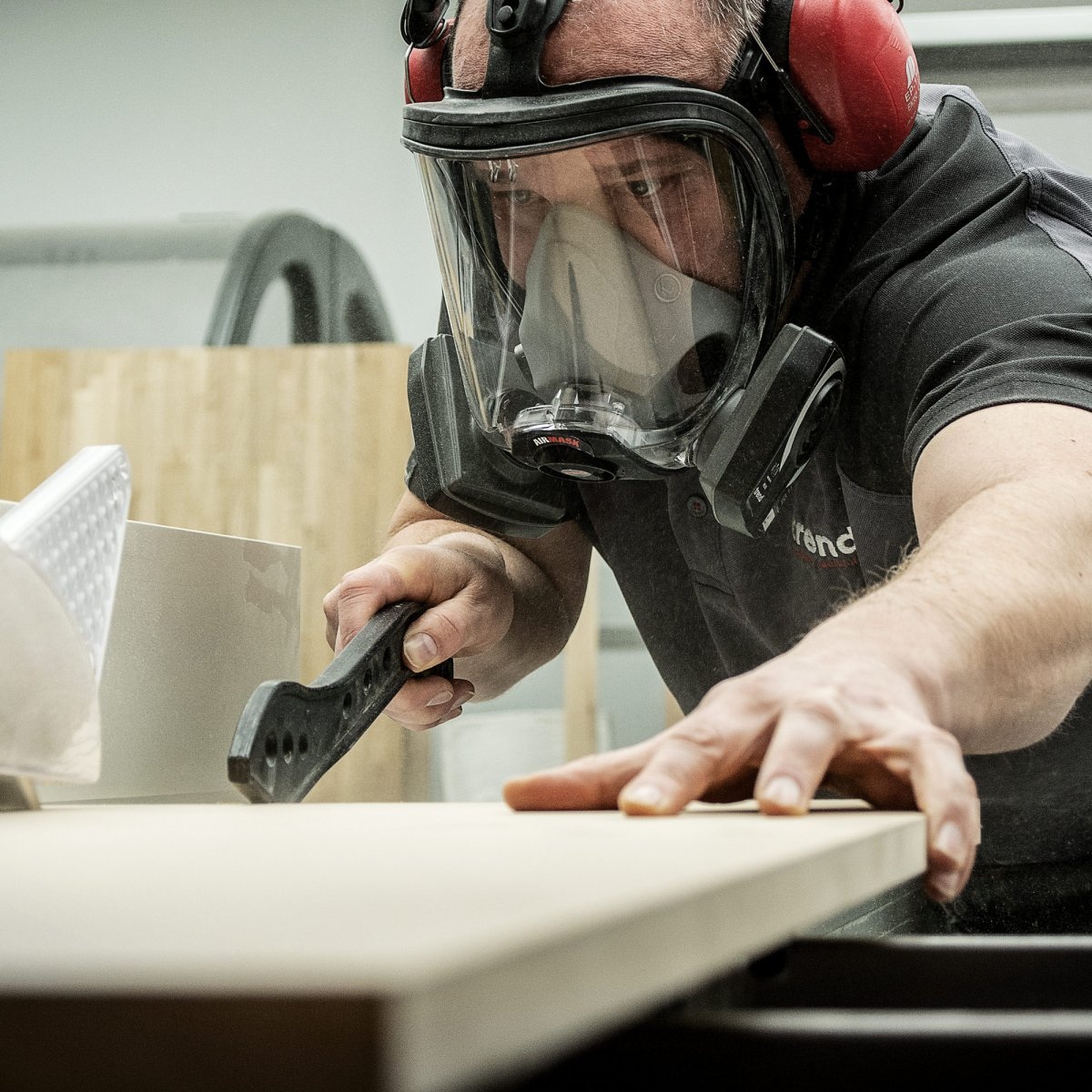
Full-Face Respirators
Advantages
* Protect lungs and eyes
* Excellent seal
* Useful for dusty and chemical tasks
Best For
* Spray finishing
* Heavy sanding
* Professional use
***
Powered Respirators (PAPR Systems)
These use a battery-powered fan and visor.
Advantages
* Very comfortable
* Reduced breathing resistance
* Less fogging
* Suitable for long sessions
Best For
* Professional furniture makers
* Turners
* Woodworkers sanding for hours at a time
Drawbacks
* Higher purchase cost
Face Visors: What They Do (and Don't Do)
A common mistake is assuming a visor provides dust protection.
A Visor Protects Against:
* Flying chips
* Splinters
* Tool kickback debris
* Branches and rough timber
A Visor Does NOT Protect Against:
* Fine airborne wood dust
* Sanding dust
* MDF particles
Best Visor Options by Task
General woodworking: safety glasses
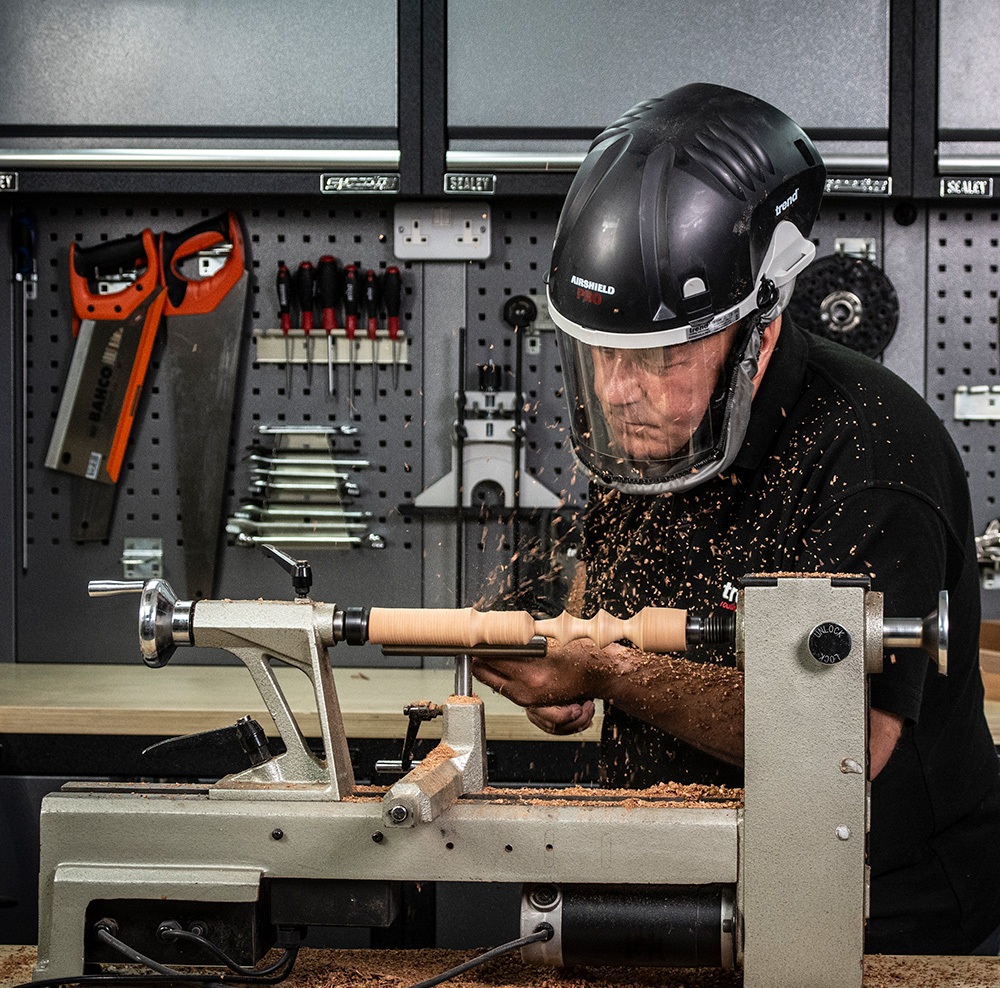
Turning on a lathe: full face visor
Chainsaw milling: forestry visor and helmet system
Heavy stock removal: full face visor
Woodturners should strongly consider full-face visors because of the risk from ejected workpieces.
Facial Hair and Mask Performance
Tight-fitting masks rely on a seal against the skin.
Beards and heavy stubble can significantly reduce effectiveness. HSE advises that respirators requiring a face seal are unsuitable where facial hair interferes with the seal.
For bearded woodworkers, a powered respirator with a hood or loose-fitting visor is often the best solution.
Final Recommendation
If you buy only one respiratory solution for general woodworking, a quality reusable half-mask respirator fitted with P3 filters offers the best balance of protection, comfort and value. For intensive sanding, MDF work or professional use, consider upgrading to a powered respirator with an integrated visor.
No items in this category